




The inca hydraulic engineering represents one of the amazing accomplishments found among pre-Columbian peoples in America. It is an example of what humans can achieve through ingenuity when working in one of the harshest environments on the planet. The Inca built water-management systems as complex as those built by both Ancient Rome and Ancient Egypt, despite not having wheels, iron tools, or written records. Their systems included canals, fountains, aqueducts, and terraces, which span from the Andes mountains in South America all the way to the cloud forests around Machu Picchu and remain operational even today.
You might be interested in reading: 5 best places to visit in Peru
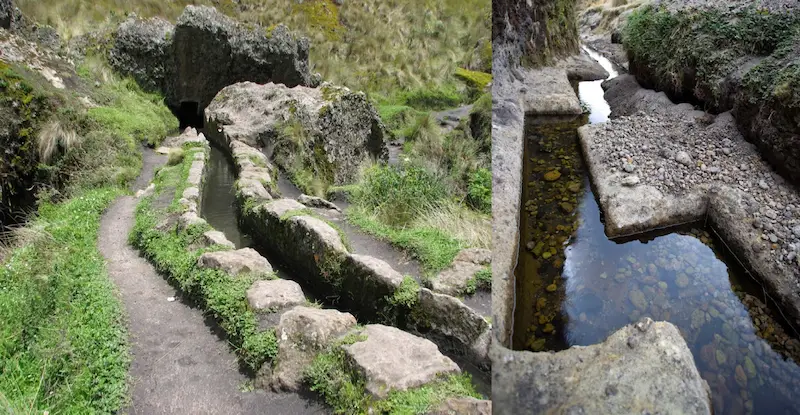
What made Inca hydraulic engineering so advanced?
The true genius of Inca hydraulic engineering lay in its deep understanding of hydrology, topography, and materials science, all achieved through observation and experimentation rather than theoretical mathematics. The Incas treated water as a sacred element but also as a resource that required absolute precision in control.
They mastered complex hydraulic principles that modern engineers only fully understood centuries later:
- Perfect calculation of flow rates and pressure drops over long distances
- Use of porous stone filters to purify water before it entered cities
- Strategic placement of air vents in aqueducts to prevent pressure buildup and bursts
- Integration of hydraulic systems with seismic-resistant architecture
These techniques allowed the Incas to supply drinking water, irrigate terraced fields, and power ritual fountains in cities located at altitudes where water management is extraordinarily difficult.
The Incas mastered gravity-fed water distribution across difficult terrain
Inca hydraulic engineering excelled at moving water across mountains, valleys, and gorges using only gravity. They built aqueducts that crossed deep ravines on stone bridges and channels that hugged cliff faces for kilometers without losing a single drop.
Key achievements in this area included:
- Aqueducts with gradients as precise as 1 to 2 % over many kilometers to maintain optimal flow velocity
- Underground channels carved through solid rock to protect water from evaporation and contamination
- Systems that delivered water to cities located 400 to 500 meters above the nearest rivers
- Multiple redundant supply lines so that if one canal was damaged, the city would not lose water
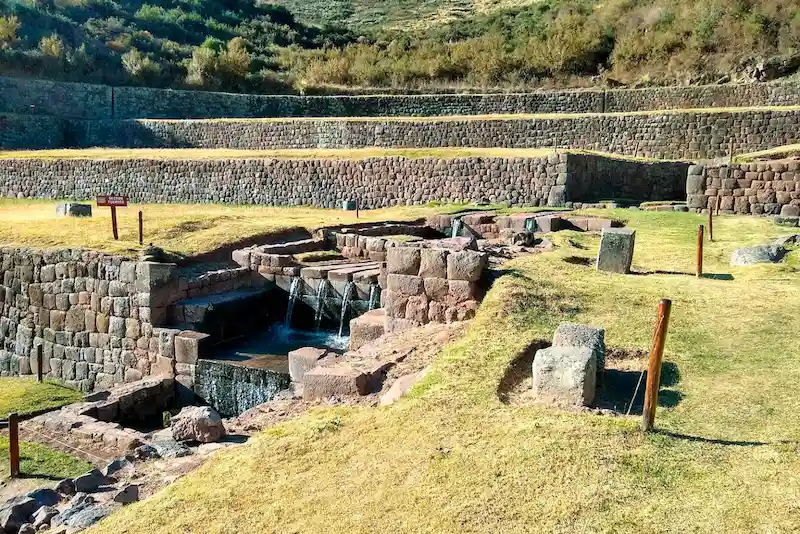
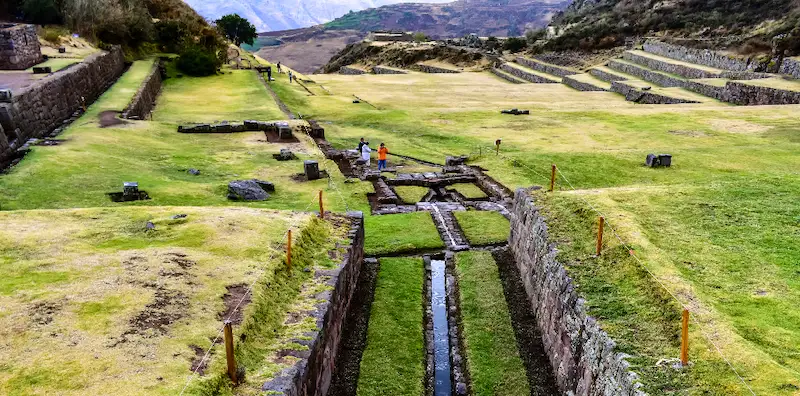
Travelers who join a reputable Cusco tour operator often visit the impressive Tipón archaeological site, where these gravity-fed systems remain perfectly functional and demonstrate how the Incas turned harsh mountain terrain into a reliable water network.
Their stone-carving precision ensured leak-free channels and fountains
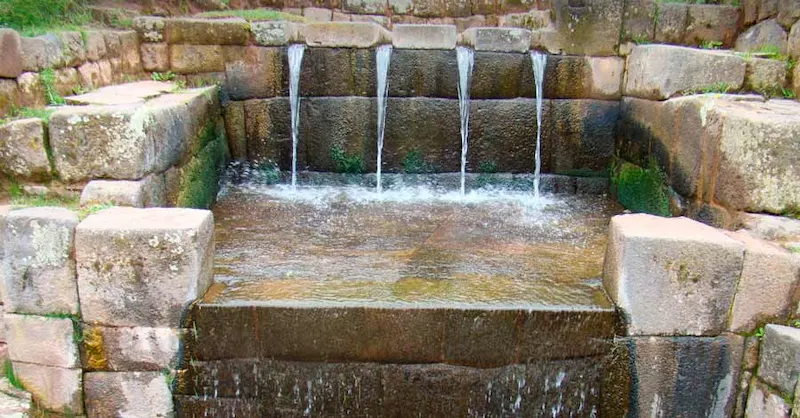
The watertight quality of Inca hydraulic engineering continues to puzzle modern stonemasons. Using only bronze and stone tools, Inca craftsmen achieved fits between stones so precise that water channels and fountains rarely leaked, even after centuries of earthquakes.
This precision manifested in several remarkable ways:
- Polygonal stones interlocked in three dimensions, creating channels with almost invisible joints
- Internal surfaces of water channels polished to reduce friction and prevent mineral buildup
- Fountain spouts carved from single blocks of granite with internal conduits that produced musical notes when water flowed
- Sealed joints that relied on the weight and shape of stones rather than mortar
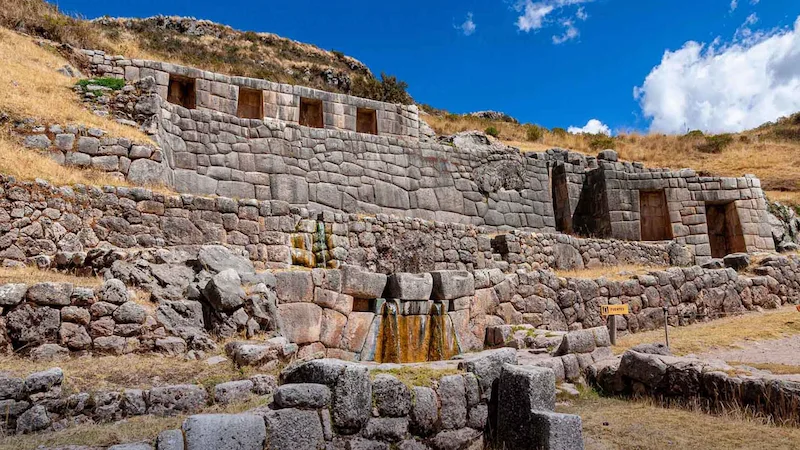
At sites like Tambomachay, known as “the bath of the Inca,” these perfectly carved channels still produce crystal-clear water flows that have operated continuously since the 15th century.
You might be interested in reading: Glamping in the Desert: A Magical Escape Beneath the Peruvian Stars
Why Inca hydraulic engineering still fascinates experts today
More than 500 years after the Spanish conquest, Inca hydraulic engineering remains an active field of academic research. The durability and elegance of these systems challenge many assumptions about what is possible with “primitive” technology.
Contemporary experts are particularly interested in how the Incas solved problems that still plague modern water infrastructure, especially in mountainous and seismic zones.
Archaeologists continue to study their sustainable water technologies
Recent excavations keep revealing new aspects of Inca hydraulic engineering that were previously unknown. Lidar scans of the Andes have uncovered hundreds of kilometers of previously hidden canals, showing that the Inca water network was far more extensive than scholars once believed.
Current archaeological research focuses on:
- Sophisticated filtration systems using sand, gravel, and charcoal layers
- Reservoirs designed to capture and store seasonal rainfall with minimal evaporation
- Drainage systems that prevented soil erosion on steep agricultural terraces
- Water distribution networks that prioritized equitable access across social classes
Many of these discoveries come from remote valleys accessible primarily through routes like the Lares trek 2 days, where hikers pass through living communities that still maintain pre-Columbian canals using traditional methods.
Modern hydrologists compare Inca systems with current engineering models
When engineers run computer simulations of Inca hydraulic engineering, they often find that the ancient designs perform as well as or better than modern equivalents in efficiency and resilience.
Specific areas where Inca solutions remain superior include:
- Energy-free water lifting through clever use of hydraulic pressure and siphons
- Self-regulating flow systems that automatically adjust to seasonal changes
- Earthquake-resistant flexible joints in stone aqueducts
- Integration of water management with agricultural and urban planning
In fact, some contemporary projects in Peru and Bolivia now incorporate Inca hydraulic principles to create more sustainable and resilient infrastructure.
Surprising facts about Inca hydraulic engineering
Beyond the well-known terraces and aqueducts, Inca hydraulic engineering hides details that continue to leave engineers speechless. These five facts show just how far ahead of their time the Incas really were.
Fact 1: They built hydraulic systems without written plans
The entire planning process relied on oral tradition and small clay models. Master architects memorized complete valley networks and transmitted them using only knotted cords called quipus. Thousands of workers executed these mental blueprints with millimeter accuracy across hundreds of kilometers. This method allowed the construction of flawless water systems without a single drawing or written measurement.
- Complete cities supplied by memory alone
- Quipus recorded flow rates instead of words
- Clay models served as 3D blueprints
- Oral transmission remained accurate for generations
Fact 2: Their channels followed natural slopes with astonishing precision
Some Inca canals maintain a perfect gradient of only 0.2 %. That means a drop of just 2 meters over an entire kilometer. Water flows fast enough to stay clean but slow enough to avoid erosion. Surveyors achieved this using simple water levels made of transparent stone.
- Precision better than many modern laser-guided systems
- Channels hug mountain contours like natural streams
- Flow velocity kept constantly between 0.4 and 0.8 m/s
- No stagnation and no channel wear after 500 years
Fact 3: Many canals were self-cleaning and required minimal maintenance
Inca hydraulic engineering included clever turbulence zones that automatically removed sediment. Sudden bends and width changes created small whirlpools that lifted sand and carried it downstream. Some canals have operated continuously since the 1400s with almost no human cleaning.
- Sharp corners generated natural flushing action
- Removable stone slabs allowed occasional deep cleaning
- Side overflow channels handled rainy-season debris
- Zero silt buildup in channels still in use today
Fact 4: Water temples show the blend of engineering and spirituality
Water was never treated as a simple resource. For the Incas, it represented a sacred, living force connected to creation, fertility, and the will of the gods. This belief shaped the design of many ceremonial sites, where water was intentionally guided through finely carved channels, cascading fountains, and carefully aligned basins that enhanced its visual and symbolic presence.
Outstanding examples include:
- The sixteen interconnected fountains at Tambomachay that produce different tones and rhythms
- The hydraulic system of Pisac that makes water disappear underground and reappear 200 meters away as a symbol of resurrection
- The twin fountains of Ollantaytambo representing the union of masculine and feminine waters
Visitors who choose the Lares Trek 3 days to Machu Picchu often pass near the sacred spring of Cuncani, where a perfectly preserved Inca fountain still feeds both the local community and the ritual baths used in Andean priests today.
Fact 5: Some fountains still function exactly as they did 500 years ago
The fountains of Tipón and Tambomachay deliver the same volume and pressure recorded by Spanish chroniclers in 1535. Inca hydraulic engineering achieved perfect hydraulic balance that has survived earthquakes, frost, and neglect.
- Sixteen fountains at Tambomachay work without repair
- Tipón channels maintain original flow rate
- Stone spouts still produce musical notes
- Water pressure remains constant year-round
Fact 6: They mastered pressure control to prevent erosion in steep terrain
Inca hydraulic engineering used expansion chambers and air vents to reduce dangerous water speed on extreme slopes. Sudden narrowing sections increased pressure exactly where needed to push water uphill for short distances.
- Drop structures slowed water on 60-degree inclines
- Air valves prevented explosive pressure buildup
- Contractions created natural siphons
- Channels survived centuries on cliff edges
Fact 7: Terraced fields used hidden drainage networks to avoid flooding
Beneath the famous andenes ran thousands of invisible stone conduits. These removed excess rain instantly while storing water in the soil. The system prevented landslides and kept fields productive even during heavy storms.
- Underground channels recharged aquifers naturally
- Permeable filling allowed controlled absorption
- Surface stayed firm during rainy season
- Same terraces still farm successfully today
You might be interested in reading: Peru Travel Guide: Essential Tips for Your Journey
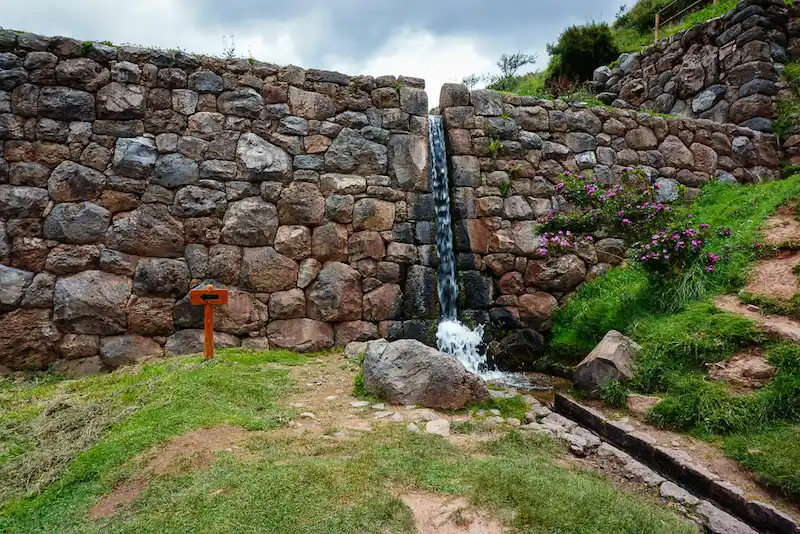
Fact 8: They redirected entire rivers to irrigate new agricultural zones
Inca hydraulic engineering cut tunnels through solid rock to change river courses. The 800-meter tunnel at Rajuchi moved the Vilcanota River to water high plateaus that were previously desert.
- Hand-carved tunnels up to 1 km long
- New farmland created at 3,800 meters altitude
- Flow volume controlled by stone gates
- System still feeds communities today
Fact 9: Stone blocks were carved so precisely that joints were almost waterproof
Polygonal stones in water channels fit with gaps smaller than 0.1 mm. Water pressure and perfect geometry created natural seals stronger than mortar.
- No cement used in hydraulic structures
- Joints remained watertight after major earthquakes
- Internal surfaces polished to reduce friction
- Mineral buildup actually improved sealing over time
Fact 10: Sacred springs were enhanced to create ritual sound effects
Inca hydraulic engineering sculpted stone so flowing water produced specific tones and rhythms. Different channels at Q’enqo create an entire musical scale when water passes through.
- Conduits shaped like organ pipes
- Waterfalls timed to echo during ceremonies
- Sound marked important calendar dates
- Acoustic effects still work perfectly
Fact 11: Some sites aligned water flow with astronomical events
At Moray and Pisac, water appears or disappears exactly when the sun hits specific points during solstices.
- Reflections marked planting seasons
- Flow changes signaled religious festivals
- Precision rivaled Stonehenge mechanisms
- Solar alignment still accurate today
Fact 12: They used filtration pools to deliver cleaner water to elite areas
Inca hydraulic engineering included multiple settling basins with sand, gravel, and charcoal layers that purified water step by step. Palaces received the clearest flow while lower areas used earlier stages.
- Four-stage natural filtration system
- Charcoal removed organic matter
- Final reservoirs stored drinking water
- Water quality varied by social status
Fact 13: Water flow was choreographed to symbolize life cycles and mythology
Twin fountains at Ollantaytambo represent upper and lower world waters mixing to create life. The entire story of creation was told through movement and sound.
- Separate channels represented male and female forces
- Mixing point symbolized fertility
- Flow speed changed with seasons
- Story visible and audible to everyone
Fact 14: Gravity-fed networks could extend for kilometers without pumps
Inca hydraulic engineering maintained perfect flow across mountains using only elevation differences. The longest known aqueduct runs 32 km from source to fortress.
- No mechanical parts anywhere
- Multiple redundant parallel channels
- Automatic flow regulation by narrow sections
- System supplied 10,000 people reliably
Fact 15: Their designs influenced modern sustainable irrigation practices
Today thousands of Andean farmers and international projects copy these ancient techniques. Restored systems increase yields by 40 % and survive droughts that destroy modern infrastructure.
- Peru and Bolivia rehabilitating ancient canals
- Zero-energy solutions for climate change
- Communities manage water with traditional rules
How Inca hydraulic engineering influences modern water management
Today, engineers and planners around the world are rediscovering principles of Inca hydraulic engineering that had been forgotten or ignored by Western science for centuries.
Urban planners draw inspiration from Inca terrace drainage
Modern cities in mountainous regions face the same problems the Incas solved centuries ago: how to prevent flooding and erosion on steep slopes. Contemporary projects in Quito, La Paz, and even Switzerland now incorporate Inca-style permeable drainage channels and stepped retention systems.
Benefits observed in recent implementations:
- Reduction of surface runoff by up to 70 % compared to concrete channels
- Natural filtration that improves water quality before it reaches rivers
- Lower long-term maintenance costs due to the absence of silt accumulation
Rural communities replicate Inca methods for sustainable irrigation
In the Peruvian Andes, more than 2,000 farming communities have revived or maintained Inca hydraulic engineering techniques for irrigation. Organizations such as the Andean Technology promote the rehabilitation of ancient canals using the same principles of gravity flow, stone lining, and communal management.
Documented successes include:
- 40 % increase in agricultural yield in rehabilitated sectors
- Ability to farm during severe droughts thanks to efficient water storage systems
- Complete elimination of conflicts over water distribution through traditional governance models inherited from the Inca period
You might be interested in reading: Huayna Picchu or Machu Picchu
Final thoughts on Inca hydraulic engineering and its legacy
Inca hydraulic engineering was advanced for its time, but in many ways is still without comparison today. They accomplished what modern engineering generally has difficulty accomplishing – systems that are highly efficient, completely sustainable, culturally appropriate, and can last for centuries with very little maintenance needed.
The Incas combined their sincere respect for natural processes along with their extreme attention to detail. Rather than attempting to dominate water, they collaborated with it. In an era when the world is experiencing increasing water shortages and when infrastructure built just a few decades ago must be replaced already, the silent canals and fountains of the Andes provide a very strong reminder to us that in some cases, the most advanced technology is the type that compliments nature, rather than competes with it.
