




However, a common question arises early in the journey: what’s the difference between llama and alpaca? While they may look similar at first glance, these animals have distinct characteristics that reflect their unique roles in Andean culture.
Understanding the difference between these two animals goes beyond simple curiosity. It helps you better appreciate local traditions, connect with communities, and even make more informed decisions when shopping for textiles or choosing cultural experiences.
In this guide, you’ll explore their origin, key differences, cultural importance, and practical travel tips. By the end, you won’t just recognize a llama or alpaca in Peru and you’ll understand the deeper story behind them.
You may be interested in: Rainbow Mountain in Peru: Travel Guide Cusco 2026
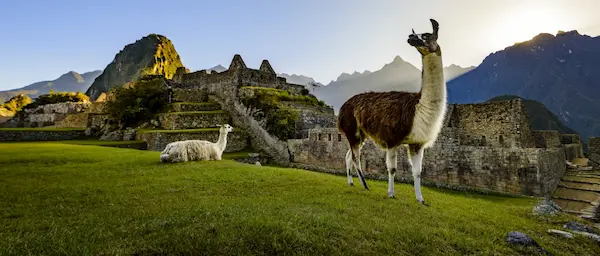
Difference between llama and alpaca: origin and history in the Andes
Llamas and alpacas are not just animals you encounter while traveling, they are the result of thousands of years of adaptation and coexistence with Andean civilizations. Their story is deeply connected to survival in extreme environments and the development of one of the most advanced ancient cultures in South America. Understanding their origin gives travelers a richer perspective of Peru beyond the typical tourist experience.
Ancient domestication in high-altitude regions
Llamas and alpacas were domesticated more than 6,000 years ago in the Andes. Indigenous communities selectively bred them from wild species like the guanaco and vicuña to serve specific needs.
This domestication process allowed Andean societies to thrive in environments where agriculture alone was not enough to sustain life.
Their role in the Inca Empire
During the Inca period, these animals were essential. Llamas served as transport animals across the vast mountain road system, while alpacas provided fiber for textiles used by all social classes.
A legacy that continues today
Even in modern Peru, llamas and alpacas remain part of daily life in rural areas. Travelers exploring Cusco will notice that these animals are not just symbols, but living elements of Andean identity.
Difference between llama and alpaca explained
Many visitors arrive in Peru without knowing how to distinguish these two animals. While they may look similar at first, learning the difference between llama and alpaca is easier than you might think. This knowledge enhances your travel experience, helping you better understand local culture, markets, and traditions you’ll encounter throughout Cusco and the Sacred Valley.
1. Size and body structure
One of the most noticeable differences between these animals is their size and physical build. Llamas are significantly larger, with long legs, a taller posture, and a more elongated body. They can reach up to 1.8 meters in height, which makes them look more imposing and easier to spot from a distance.
Alpacas, on the other hand, are much smaller and more compact. Their bodies are shorter and rounder, giving them a softer and more approachable appearance. This size difference is especially useful when you’re trying to quickly decide: llama or alpaca in Peru?
2. Face and ears
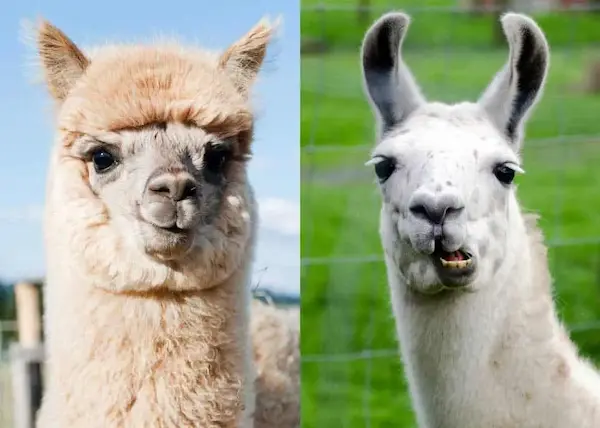
Facial features are one of the easiest ways to identify the difference between llama and alpaca. Llamas have long, narrow faces and distinctive banana-shaped ears that curve slightly inward. Their expression tends to look more alert and defined.
Alpacas have shorter, flatter faces with a more rounded structure. Their ears are straight and pointed, often described as spear-shaped. Combined with their fluffy wool, this gives them a “teddy bear” appearance that many travelers instantly recognize.
3. Fiber and coat quality
Another key difference lies in their fiber. Alpacas are highly valued for their wool, which is known for being incredibly soft, lightweight, and warm. It is commonly used in high-quality clothing such as sweaters, scarves, and blankets.
Llama fiber, while still useful, is coarser and less refined. It is often used for ropes, rugs, or heavier textiles rather than fine garments. This distinction is important when shopping in Cusco, as many products are marketed as alpaca due to their superior quality.
4. Behavior and personality
Behavior also plays a role in understanding the difference between llama and alpaca. Llamas tend to be more independent, confident, and sometimes even assertive. They are used to interacting with humans in working environments, which makes them more adaptable but also more dominant in certain situations.
Alpacas are more social and gentle by nature. They prefer staying in groups and are generally more timid. Their calm demeanor makes them easier to handle in controlled environments like farms, but less suited for tasks that require strength or independence.
5. Practical uses and roles
Historically and in modern times, the roles of these animals are clearly defined. Llamas are primarily used as pack animals. They can carry loads across long distances in mountainous terrain, making them essential for transport in remote areas.
Alpacas, in contrast, are raised almost exclusively for their fiber. Their wool supports entire local industries and is one of Peru’s most valuable natural exports. When asking “llama or alpaca in Peru?”, understanding their purpose often provides the clearest answer.
Difference between llama and alpaca explained for travelers
Many visitors arrive in Peru without knowing how to distinguish these two animals. While they may look similar at first, learning the difference between llama and alpaca is easier than you might think. This knowledge not only improves your travel experience, but also helps you better understand Andean culture, local economies, and even the products you’ll find in Cusco markets.
Similarities in appearance
Both animals have long necks, soft fur, and come in a variety of natural colors. Without prior knowledge, the differences are subtle.
Tourist settings can be misleading
In Cusco city, llamas are often decorated with colorful textiles for photos. These visual elements can distract from their natural features, making identification harder.
Lack of pre-trip knowledge
Most travelers don’t research these animals before arriving. Learning the difference between llama and alpaca beforehand allows for a more enriching and informed experience.
Difference between llama and alpaca in Cusco: where to see them
Knowing the difference between llama and alpaca becomes especially useful when exploring Cusco and its surroundings. From the Sacred Valley to local villages, these animals appear in different contexts depending on their role. Understanding the difference between llama and alpaca allows travelers to recognize them easily and appreciate their presence in each location.
1) Sacred Valley landscapes
The Sacred Valley is one of the best places to see both animals roaming freely. Many travelers choose to explore this region through a guided Valle Sagrado full day tour, where you can see llamas and alpacas surrounded by traditional villages and breathtaking Andean landscapes.
2) Alpaca farms and textile centers
These locations provide insight into how alpaca wool is processed and used. Many offer interactive experiences where visitors can feed and learn about the animals.
3) Cusco city encounters
In the city center, llamas are often present for photos. While more commercial, these encounters are still part of the cultural landscape and offer a quick introduction.
You may be interested in: Festivals in Cusco 2026: the ultimate guide to the most important celebrations
Fascinating facts about llamas and alpacas
Beyond their appearance and uses, the difference between llama and alpaca becomes even more interesting when you explore their unique characteristics. These animals have traits that surprise many travelers and reveal how distinct they truly are.
Communication and sounds
Alpacas communicate through gentle humming sounds, especially between mothers and their offspring. Llamas use more expressive body language and vocal cues.
The truth about spitting
Spitting is often misunderstood. It’s a natural behavior used mainly among animals to establish hierarchy, not something they do randomly to humans.
Alpaca fiber quality
Alpaca wool is considered one of the finest natural fibers in the world. It’s warmer than sheep’s wool, lightweight, and hypoallergenic.
Cultural symbolism
In Andean beliefs, these animals symbolize abundance, harmony, and connection with nature. They are still part of rituals and traditional ceremonies.
Travel tips for interacting with llamas and alpacas
If you’re looking for a more immersive experience, choosing tours personalizados in Peru can help you explore authentic communities where llamas and alpacas are part of everyday life. This allows you to better understand the difference between llama and alpaca while connecting with local culture in a more meaningful way.
Approach calmly
Avoid sudden movements and give the animals space. Observing them first helps you understand their behavior.
Ask before taking photos
If the animals belong to locals, always ask permission before taking pictures. This is especially important in Cusco city.
Avoid feeding without guidance
Feeding should only be done when allowed, as improper food can harm the animals.
Respect their environment
Remember that these animals are part of a living culture, not just tourist attractions.
Where to stay in Cusco for a more authentic experience?
Your accommodation plays a key role in how deeply you connect with the destination. When planning your stay, understanding the difference between llama and alpaca can even influence the type of experience you seek, especially if you want to be closer to authentic Andean culture.
Sacred Valley for cultural immersion
Staying in the Sacred Valley allows you to be closer to nature, local communities, and authentic Andean life. It’s ideal if you want to experience llama or alpaca in Peru beyond the typical tourist setting.
Cusco city for convenience
Cusco offers easy access to historical sites, restaurants, and tours. It’s a great base for first-time visitors.
Finding the right accommodation style
Whether you prefer hostels, boutique hotels, or luxury stays, selecting the right place ensures comfort while enhancing your overall experience.
How llamas and alpacas impact sustainable tourism in Peru?
In modern travel, the difference between llama and alpaca also reflects their role in sustainability. These animals support eco-friendly practices and local economies in the Andes. Understanding the difference between llama and alpaca helps travelers make more responsible choices when participating in tours or purchasing local products.
Supporting local communities
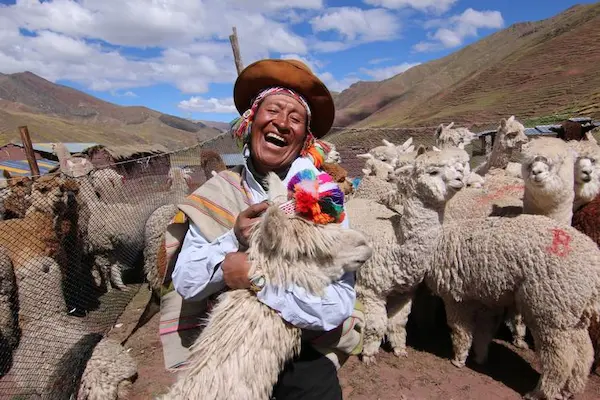
Many Andean families depend on alpaca breeding and textile production as their main source of income. By purchasing authentic alpaca products or visiting ethical farms, travelers directly contribute to these communities.
Low environmental impact animals
Unlike other livestock, llamas and alpacas are environmentally friendly. Their soft-padded feet do not damage the soil, and they consume native vegetation without overgrazing.
Ethical tourism experiences
Choosing responsible tours and farms ensures animals are treated well and cultural traditions are respected. This is especially important when deciding where to experience llama or alpaca in Peru in an authentic way.
How to identify real alpaca products in Cusco markets?
When shopping in Cusco, knowing the difference between llama and alpaca is essential. Many products are marketed as alpaca, but not all are authentic. Understanding the difference between llama and alpaca helps you identify quality items, avoid misleading labels, and make informed purchasing decisions.
1) Check the texture and softness
Real alpaca fiber feels incredibly soft and smooth, without the itchiness of sheep’s wool. If it feels rough, it’s likely synthetic or blended.
2) Look at the price
Authentic alpaca products are not extremely cheap. If the price seems too good to be true, it probably is. Baby alpaca, the highest quality, is even more valuable.
3) Read labels carefully
Look for labels that specify “100% alpaca” or “baby alpaca.” Avoid generic terms like “alpaca blend” if you’re looking for authenticity.
4) Ask local vendors questions
Engaging with sellers not only helps verify authenticity but also creates a more meaningful cultural interaction. This adds depth to your understanding of the difference between llama and alpaca, especially in terms of their economic value.
You might be interested in reading: What to do in Lima for a day
Best experiences combining culture, nature, and wildlife in Cusco
For travelers seeking unforgettable landscapes, combining wildlife encounters with iconic destinations is a great option. Many visitors include tour Montaña 7 Colores in their itinerary, where it’s also common to see llamas and alpacas.
Visiting traditional weaving communities
These experiences allow you to see the full process from alpaca care to textile creation. It’s one of the most authentic ways to understand Andean life.
Hiking with llamas in the Andes
Some trekking routes offer the chance to hike alongside llamas carrying supplies. This recreates ancient Andean travel methods and offers a unique perspective.
Photography experiences in natural settings
Seeing llamas and alpacas in open landscapes, surrounded by mountains, provides far more meaningful photos than staged city encounters.
More than animals, a gateway to understanding Peru
When travelers first arrive, it’s common to wonder: what’s the difference between llama and alpaca? But by the end of your journey, that question often evolves into something much deeper.
Understanding the difference between llama and alpaca is not just about identifying physical traits, it’s about recognizing their role in shaping Andean civilization, sustaining communities, and preserving cultural traditions that are still alive today. These animals are woven into the identity of Cusco, from ancient history to modern tourism.
Choosing to learn about them changes the way you experience Peru. You begin to notice details others might overlook, the texture of a handmade textile, the rhythm of rural life, the connection between people and nature at high altitudes. Even a simple encounter becomes meaningful when you understand the story behind it.
Whether you’re exploring the Sacred Valley, visiting a weaving village, or simply walking through Cusco’s streets, knowing how to distinguish llama or alpaca in Peru allows you to engage more consciously with your surroundings. It transforms passive sightseeing into active cultural discovery.
