


Cusco is not only famous for being the historic capital of the Inca Empire and the gateway to Machu Picchu. It is also one of the most culturally vibrant destinations in South America. Throughout the year, festivals in Cusco fill the streets with music, colorful costumes, traditional dances, and religious ceremonies that reflect centuries of Andean traditions.
Many of these celebrations combine ancient Inca rituals with Catholic traditions introduced during the colonial period. This cultural fusion creates a unique atmosphere where indigenous beliefs, spiritual devotion, and community pride come together in spectacular events.
For travelers visiting Peru, experiencing the festivals in Cusco offers a deeper understanding of local culture. Whether it’s the famous Inti Raymi ceremony or a traditional pilgrimage in the Andes, these celebrations reveal the living heritage of the region.
This guide explores the most important festivals, when they take place, and why they remain such an essential part of Andean culture.
Why festivals in Cusco are so important
Cusco is widely considered one of the cultural capitals of Peru. The region preserves traditions that date back to the time of the Inca Empire and even earlier.
Many festivals were originally connected to agricultural cycles, honoring natural forces such as the sun, mountains, and the earth. After the Spanish conquest, Catholic religious celebrations were introduced, and over time these traditions blended with indigenous beliefs.
Today, this cultural fusion can be seen in almost every celebration. Processions of Catholic saints are accompanied by traditional Andean music, dancers wear symbolic costumes representing historical characters, and communities gather to celebrate their heritage.
Throughout the year, Cusco hosts dozens of festivities, but some of them stand out for their historical significance, cultural importance, and popularity among visitors.
You might be interested in reading: What to do in Lima for a day
Inti Raymi: the festival of the sun
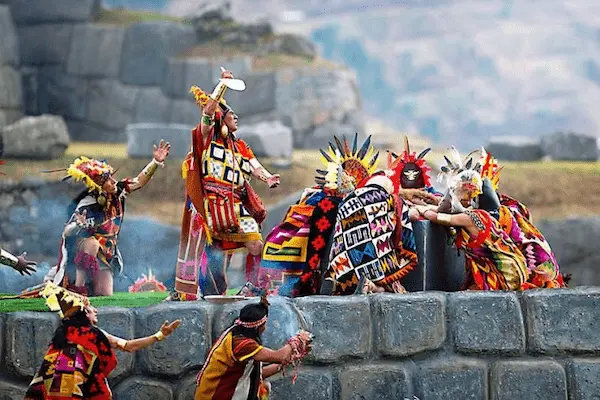
Among all the festivals in Cusco, Inti Raymi is the most famous. Celebrated every year on June 24, this festival recreates an ancient Inca ceremony honoring Inti, the Sun God.
In the Inca Empire, Inti Raymi marked the winter solstice and symbolized the beginning of a new agricultural cycle. It was one of the most important religious ceremonies of the empire.
Today, the celebration has been revived as a historical reenactment performed by hundreds of actors wearing traditional costumes.
Main locations of Inti Raymi
The ceremony takes place in three iconic locations in Cusco:
Qorikancha (Temple of the Sun)
The festival begins here, where the Inca emperor symbolically greets the rising sun.
Plaza de Armas
The main square of Cusco hosts part of the procession and attracts thousands of spectators.
Sacsayhuamán fortress
The final and most dramatic part of the ceremony takes place here, where the Inca court performs rituals honoring the sun.
Thousands of visitors travel to Cusco every year specifically to witness this spectacular event.
Corpus Christi: a blend of faith and culture
Another major celebration among the traditional festivals in Cusco is Corpus Christi.
This religious festival takes place about sixty days after Easter and is one of the most important Catholic celebrations in the city.
During Corpus Christi, fifteen statues of saints and virgins from different churches are carried through the streets in large processions. These images gather in the Cusco Cathedral while thousands of people celebrate with music, dancing, and traditional food.
The traditional dish: chiri uchu
One of the most famous culinary traditions during this festival is chiri uchu, a unique dish prepared with ingredients from different regions of Peru, including guinea pig, chicken, sausage, cheese, and corn.
This dish symbolizes the cultural diversity of the Andes and is an essential part of the celebration.
Qoyllur Rit’i: a sacred pilgrimage in the Andes
One of the most fascinating cultural events in the Cusco region is the Qoyllur Rit’i pilgrimage.
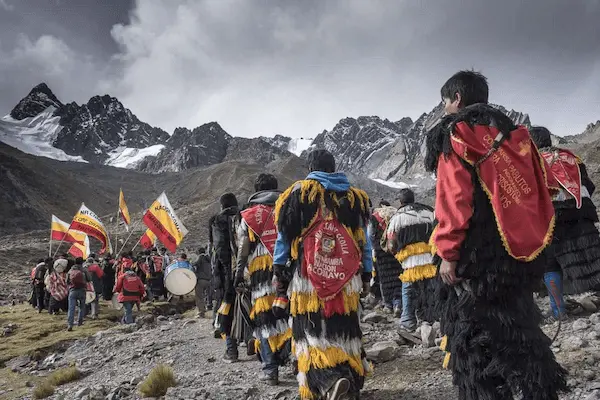
This extraordinary festival takes place in the high Andes near the Ausangate mountain, where thousands of pilgrims hike to a sacred glacier more than 4,700 meters above sea level.
The pilgrimage blends indigenous beliefs about sacred mountains with Catholic religious symbolism. Participants perform traditional dances and rituals as part of their spiritual journey.
For many Andean communities, this festival represents a deep connection to nature and ancestral traditions.
Virgen del Carmen festival
Another important celebration in the Cusco region takes place in the town of Paucartambo every July.
The Virgen del Carmen festival honors the Virgin Mary and is known for its spectacular dances, colorful costumes, and lively street celebrations.
One of the most iconic elements of this festival is the performance of masked dancers representing different historical characters.
These dances tell stories about colonial history, indigenous resistance, and cultural identity, making the festival both a religious event and a theatrical celebration.
Visitors who attend often describe it as one of the most authentic cultural experiences in the Andes.
Cusco carnival: a joyful celebration
Cusco’s Carnival is another lively event that highlights the playful spirit of Andean communities.
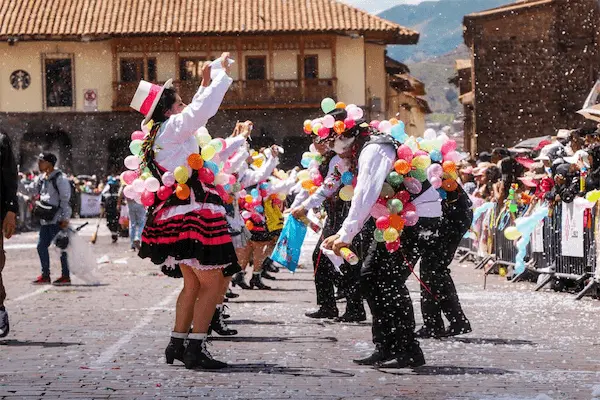
Celebrated between February and March, this festival features water games, music, and traditional dances. People throw water balloons, spray foam, and celebrate together in the streets.
The yunza tradition
A popular tradition during Carnival is the yunza, where a decorated tree filled with gifts is placed in the center of a celebration. Participants dance around the tree until it is cut down, releasing the gifts for everyone to collect.
Carnival is one of the most interactive festivals in Cusco, and visitors often find themselves joining the festivities.
You might be interested in reading: 5 best places to visit in Peru
Santurantikuy: the traditional Christmas market
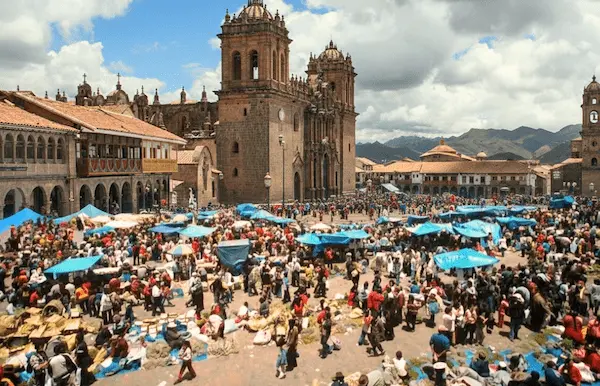
One of the most unique cultural events in Cusco takes place on December 24.
Santurantikuy is a traditional Christmas market held in the Plaza de Armas where artisans sell handmade religious figures, nativity scenes, and traditional crafts.
The name comes from the Quechua language and means “selling of saints.”
For centuries, families have visited this market to purchase decorations for their Christmas nativity scenes, making it one of the oldest Christmas traditions in the Andes.
Experiencing local culture beyond the city
Although many of the most famous festivals in Cusco take place in the historic center, many communities in the Sacred Valley and surrounding regions celebrate their own local festivals.
These events often include traditional dances, music, food, and religious ceremonies that reflect the unique identity of each village.
Travelers interested in exploring these traditions more deeply often combine cultural experiences with outdoor adventures organized by experienced tour operators such as inkas expeditions.
Exploring rural communities during festival season offers visitors a more authentic perspective on Andean culture.
Trekking and festivals in Cusco: a perfect combination
Cusco is also one of the world’s most famous trekking destinations. Many travelers visit the region to hike through the Andes and explore ancient Inca trails.
Fortunately, the trekking season often overlaps with important festivals, making it possible to combine both experiences in a single trip.
For example, travelers completing classic inca trail treks often return to Cusco during the month of June, when the city celebrates Inti Raymi and other cultural events.
Another popular adventure is the salkantay trek 5 days to machu picchu which passes through dramatic mountain landscapes and remote Andean communities before reaching the famous citadel.
Combining trekking adventures with cultural celebrations provides a richer travel experience and allows visitors to connect with both the natural beauty and the traditions of the Andes.
Best time to experience festivals in Cusco
Cusco hosts celebrations throughout the year, but some months are particularly rich in cultural events.
June is often considered the peak festival season. During this time, the city celebrates:
- Corpus Christi
- Inti Raymi
- Cusco’s anniversary celebrations
However, other times of the year also offer unique celebrations, including Carnival in February and Santurantikuy in December.
Tips for attending festivals in Cusco
If you plan to attend festivals in Cusco, a few practical tips can help you enjoy the experience even more. These celebrations can attract thousands of visitors and often take place in busy public spaces, so a little preparation will make your visit more comfortable and enjoyable.
Arrive early
Major festivals attract large crowds, especially events like Inti Raymi. Arriving early allows you to find a good viewing spot and enjoy the atmosphere before the main celebrations begin.
Respect local traditions
Many festivals have strong religious significance, so it is important to behave respectfully during ceremonies.
Try traditional food
Many festivals feature special dishes that are only prepared during specific celebrations.
Bring cash
Street vendors and artisans often sell crafts, souvenirs, and local snacks during festival events.
You might be interested in reading: 6 best Cusco tour operators
How festivals in Cusco preserve Andean cultural heritage
One of the most remarkable aspects of festivals in Cusco is their role in preserving Andean cultural heritage. These celebrations are not simply entertainment or tourist attractions; they are living traditions that help communities maintain their identity and pass knowledge from one generation to the next.
In many Andean villages around the Cusco region, preparations for festivals begin weeks or even months in advance. Families work together to create traditional costumes, rehearse dances, and organize community activities. These preparations strengthen social bonds and reinforce the importance of collective participation in local traditions.
Traditional dances performed during festivals in Cusco often tell historical stories or represent symbolic characters from Andean mythology. Some dances depict ancient agricultural rituals connected to the seasons, while others reflect historical events from the colonial period. Through these performances, communities keep their history alive in a dynamic and meaningful way.
Music is another essential element of many festivals in Cusco. Traditional instruments such as pan flutes, drums, and brass bands accompany processions and dance groups, creating the distinctive sounds that define celebrations throughout the Andes.
For younger generations, participating in these festivals provides an opportunity to learn about their cultural roots. Children and teenagers frequently join dance groups, wear traditional costumes, or help organize community events. This participation ensures that the traditions associated with festivals in Cusco continue to thrive in the future.
For travelers, attending these celebrations means experiencing more than colorful parades and performances. Festivals in Cusco represent a living cultural heritage that has survived centuries of change while remaining deeply connected to the traditions and identity of the Andean people.
Cultural heart of the Andes
Experiencing festivals in Cusco offers travelers a unique opportunity to connect with the cultural heart of the Andes. These celebrations are more than colorful events on the calendar, they represent centuries of history, spirituality, and community traditions that continue to shape daily life in the region. From grand ceremonies like Inti Raymi to vibrant local celebrations in small Andean towns, festivals bring together music, dance, traditional food, and religious devotion in ways that reflect the rich cultural heritage of Cusco. For visitors, witnessing these events provides a deeper understanding of how ancient customs and colonial influences have blended over time to create the traditions that define the region today.
For travelers looking to experience Peru beyond its famous archaeological sites, attending festivals in Cusco can transform a trip into a meaningful cultural journey. These celebrations allow visitors to see how communities celebrate their identity, honor their ancestors, and maintain traditions that have been passed down through generations. Whether exploring bustling city celebrations or discovering smaller local festivities in nearby villages, festivals reveal the living spirit of the Andes and create unforgettable memories for those who take the time to experience them.
