




If you’re dreaming of trekking to Machu Picchu but can’t decide between the Inca Trail vs Salkantay Trek, you’re not alone. Both routes offer breathtaking landscapes, a sense of adventure, and the ultimate reward of reaching the Lost City of the Incas. But they cater to different types of travelers.
The Inca Trail is the iconic path, a journey through history that follows ancient stone trails built by the Incas, passing through impressive archaeological sites and cloud forests before arriving at Machu Picchu through the legendary Sun Gate. On the other hand, the Salkantay Trek is the more rugged, nature-focused alternative, offering dramatic scenery—from towering glaciers to lush jungles—without the need for a permit.
Choosing between these two treks depends on what kind of experience you’re looking for. Do you want a historic and structured trek steeped in Incan culture, or a wilder, off-the-beaten-path adventure with fewer restrictions? Let’s dive into the key differences to help you decide which trek is right for you.
You might also be interested in: How to Train for the Inca Trail: The Best Guide for Hikers 2025
How to get to the Salkantay Trek and Inca Trail
Planning your trek to Machu Picchu? Whether you’re taking the Inca Trail or the Salkantay Trek, knowing how to get to the starting points is essential. These treks begin in different locations and have different logistical requirements. Here’s everything you need to know about how to get to the Salkantay Trek and the Inca Trail.
How to get to the Salkantay Trek
Unlike the Inca Trail, the Salkantay Trek does not require a government permit, making it a more flexible option for travelers. The trek typically starts in Mollepata or Soraypampa, both of which are accessible from Cusco.
Step 1: Arriving in Cusco
The Salkantay Trek starts from Cusco, the gateway to most treks in the region. To get to Cusco:
- By Plane: The easiest way to reach Cusco is by flying into Alejandro Velasco Astete International Airport (CUZ). There are daily flights from Lima, Arequipa, and other major Peruvian cities.
- By Bus: If you’re coming from Lima, Arequipa, or Puno, you can take a long-distance bus to Cusco. The journey from Lima takes about 20-24 hours, while buses from Arequipa or Puno take 6-10 hours.
Step 2: Getting to Mollepata or Soraypampa (Starting Points)
Most treks begin from Mollepata (2,900m / 9,514ft) or Soraypampa (3,900m / 12,795ft). Here’s how to get there:
- By Private Transport (Recommended): Many trekking companies include transportation from Cusco to the starting point as part of their package. This is the easiest and most convenient option.
- By Bus or Shared Taxi: If you’re traveling independently, you can take a colectivo (shared van) from Cusco to Mollepata, which takes about 2.5 to 3 hours. From Mollepata, you can take another ride to Soraypampa, the starting point of the trek.
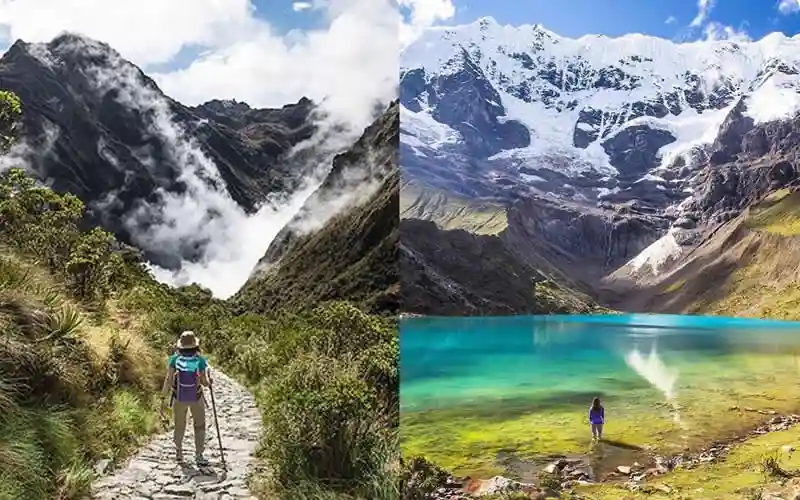
Once you arrive, you’ll begin your 5-day journey to Machu Picchu, passing through stunning landscapes like Salkantay Pass, Humantay Lake, and the cloud forests of the Amazon basin.
How to Get to the Inca Trail
The Inca Trail is the most famous trekking route to Machu Picchu, but it requires more preparation due to strict regulations and permits. The trail starts at Km 82, near the town of Ollantaytambo in the Sacred Valley.
Step 1: Arriving in Cusco
Like the Salkantay Trek, the Inca Trail also starts in Cusco. Follow the same instructions for flying or taking a bus into the city.
Step 2: Traveling to the Inca Trail Starting Point (Km 82)
The Inca Trail officially begins at Km 82, located along the Cusco-Ollantaytambo-Aguas Calientes railway line. To get there:
With a Tour Operator (Recommended): Since the Inca Trail requires a permit, most trekkers go with a tour company that provides transportation from Cusco to Km 82. This is the easiest and most organized way to start the trek.
- By Train (Partially): You can take a PeruRail or IncaRail train from Cusco or Ollantaytambo toward Aguas Calientes and request a stop at Km 82. From there, you’ll begin the trek.
- By Bus or Taxi: You can also take a bus or taxi from Cusco to Ollantaytambo (1.5-2 hours) and then another taxi or private transport to Km 82 (about 30-45 minutes).
- Once at Km 82, you’ll begin the 4-day trek, passing through stunning Inca ruins like Wiñay Wayna, Runkurakay, and Inti Punku (the Sun Gate) before reaching Machu Picchu.
You might also be interested in: Top 5 best inca trail tour companies
Inca trail vs Salkantay trek: Key differences
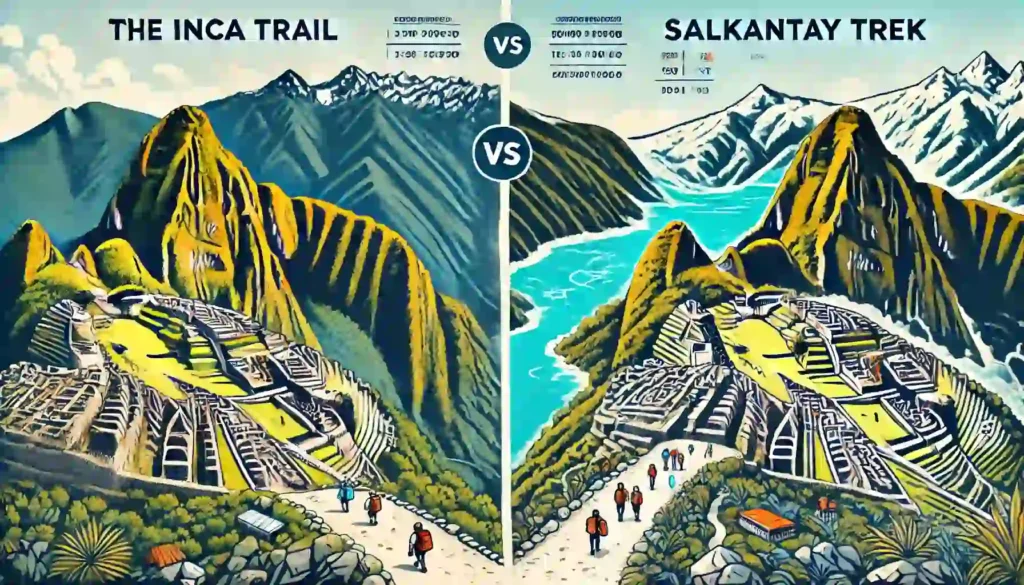
If you’re planning a trek to Machu Picchu, one of the biggest decisions you’ll face is choosing between the Inca Trail and the Salkantay Trek. While both routes lead to the legendary Incan citadel, they offer vastly different experiences in terms of scenery, difficulty, permits, and overall atmosphere. Here’s a detailed breakdown of the key differences to help you decide which trek is right for you.
- Scenery and landscapes
One of the most striking differences between the Inca Trail and the Salkantay Trek is the variety of landscapes you’ll encounter.
- Inca Trail: This trek takes you through ancient Incan roads, passing numerous archaeological sites, cloud forests, and high-altitude Andean scenery. Along the way, you’ll walk through misty mountain passes and lush greenery before reaching the iconic Sun Gate (Inti Punku), your first breathtaking view of Machu Picchu.
- Salkantay Trek: The Salkantay route is known for its dramatic natural beauty, taking you from snow-capped peaks to tropical cloud forests. The highlight is Salkantay Pass (4,650m / 15,255ft), where you’ll witness the towering Salkantay Mountain, one of the highest in Peru. As you descend, you’ll pass turquoise glacial lakes, high-altitude plains, and finally, lush jungle landscapes.
- If you’re drawn to historical sites and ancient ruins, the Inca Trail is the way to go. But if you crave diverse and breathtaking landscapes, the Salkantay Trek might be a better choice.
- Difficulty and physical challenge
Both treks require good physical fitness, but they differ in terms of difficulty and terrain.
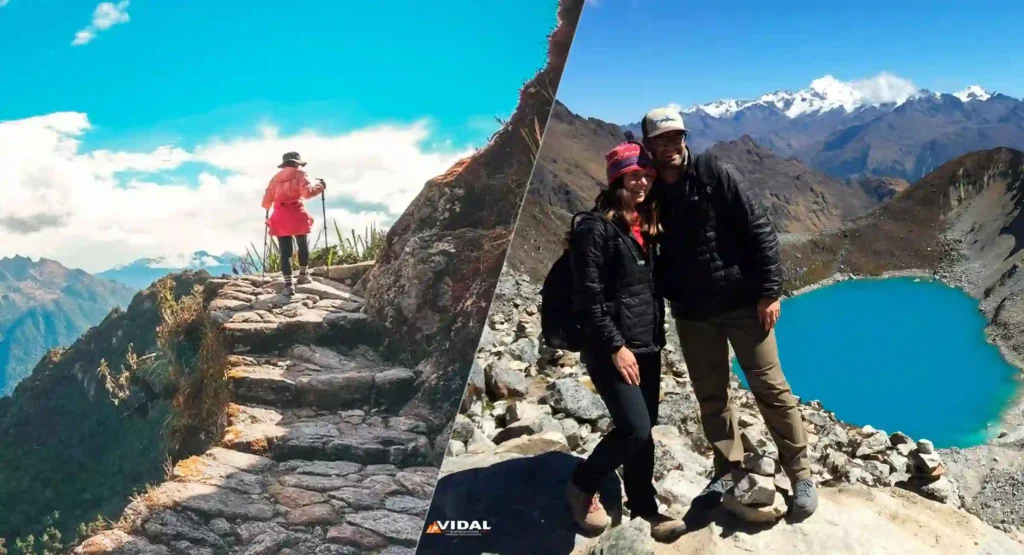
- Inca Trail: This trek is shorter (4 days, 3 nights) but involves steep stone steps, multiple ascents and descents, and high-altitude trekking. The highest point, Dead Woman’s Pass (4,215m / 13,828ft), is particularly challenging.
- Salkantay Trek: Considered more strenuous, this trek is longer (5 days, 4 nights) and reaches higher altitudes. Salkantay Pass (4,650m / 15,255ft) is the most demanding section, but the varied terrain—ranging from glaciers to jungle—keeps the experience dynamic.
Many travelers also choose to explore the region beforehand with a Sacred Valley Tour from Cusco, which provides a fascinating glimpse into the rich culture and stunning landscapes of the Andean highlands before embarking on their trek.
- Permit Requirements and availability
- Inca Trail: This trek requires a government-issued permit, and spots sell out months in advance (sometimes 6+ months). Only 500 permits are issued per day (including guides and porters), making it one of the most regulated treks in the world.
- Salkantay Trek: No permit is required, meaning more flexibility in booking. You can often secure a spot last-minute, making it a great alternative if Inca Trail permits are sold out.
- If you want to experience the famous, classic route to Machu Picchu, you’ll need to plan ahead for the Inca Trail. If you prefer a more flexible option, the Salkantay Trek is an excellent alternative.
- Archaeological sites along the route
If your goal is to see ancient Incan ruins, the Inca Trail is unbeatable.
- Inca Trail: This trek passes through multiple archaeological sites, including Runkurakay, Sayacmarca, Phuyupatamarca, and Wiñay Wayna—all ancient Incan settlements that add a cultural and historical depth to the journey.
- Salkantay Trek: This trek is more about nature and scenery rather than ruins. While you’ll still visit Machu Picchu at the end, the route itself lacks the same level of archaeological significance as the Inca Trail.
- If you’re a history enthusiast, the Inca Trail is the best choice. If you’re more interested in nature and adventure, the Salkantay Trek offers an unforgettable experience.
- Cost and comfort level
- Inca Trail: Generally more expensive due to permit fees and government regulations. Prices range from $600 to $1,000+, depending on the tour operator. Porters carry most of the camping equipment, making it a more comfortable experience.
- Salkantay Trek: More affordable, with tours ranging from $250 to $600. You’ll need to carry more of your own gear (or rent mules), and the camping conditions are more basic. However, some treks offer eco-lodges and glamping options for added comfort.
- If you’re on a budget, the Salkantay Trek is the cheaper alternative. If you prefer a well-organized and structured experience, the Inca Trail is worth the investment.
You might also be interested in:
Inca Trail vs Salkantay Trek: Which is better for your hiking style?
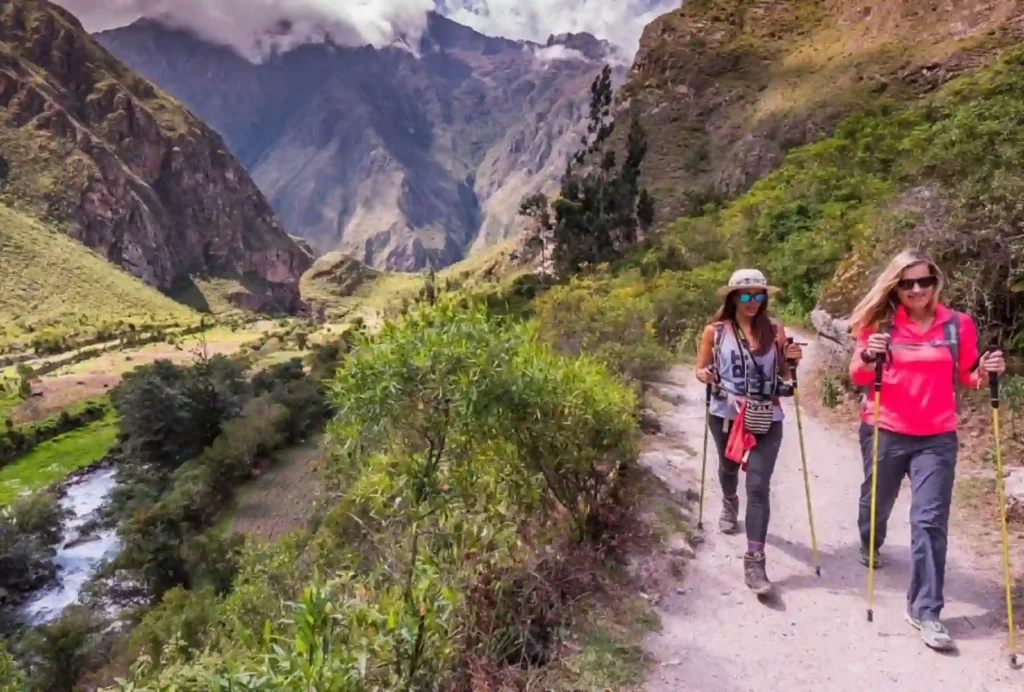
If you’re dreaming of trekking to Machu Picchu, choosing between the Inca Trail vs Salkantay Trek can be a tough decision. Each trail offers a unique experience, catering to different hiking styles, fitness levels, and personal preferences. Whether you’re drawn to history, scenery, or adventure, let’s break down which trek is best for you.
- The classic hiker: Inca Trail
If you love history, archaeology, and iconic landmarks, the Inca Trail is your perfect match. This legendary 4-day trek follows an ancient Incan pathway, passing through well-preserved ruins, cloud forests, and high-altitude passes. You’ll reach Machu Picchu through the famous Sun Gate (Inti Punku), making for an unforgettable first glimpse of the Lost City.
- Best for: History lovers, cultural enthusiasts, and those wanting the classic Machu Picchu experience.
- Challenges: Requires a permit (book months in advance) and includes steep ascents, especially Dead Woman’s Pass (4,215m / 13,828ft).
- The adventure seeker: Salkantay Trek
If you crave wild landscapes, rugged mountains, and fewer crowds, the Salkantay Trek is your best bet. This 5-day trek covers nearly twice the distance of the Inca Trail, passing through snow-capped peaks, turquoise glacial lakes, and lush jungles. Instead of reaching Machu Picchu via the Sun Gate, you’ll arrive in Aguas Calientes, then take a short bus ride up to the ruins.
- Best for: Nature lovers, off-the-beaten-path hikers, and those who prefer scenic diversity over archaeology.
- Challenges: More demanding due to higher altitudes (Salkantay Pass at 4,650m / 15,255ft) and unpredictable weather.
- Which one is right for you?
Go for the Inca Trail if you want historical significance, well-preserved ruins, and the classic Machu Picchu entrance.
Choose the Salkantay Trek if you prefer stunning natural landscapes, fewer regulations, and a more adventurous challenge.
You might also be interested in: Best time to visit Peru: Arrive at the perfect moment
Inca Trail vs Salkantay Trek difficulty: Which one is more challenging?
Inca Trail or Salkantay Trek cost
When planning your Machu Picchu adventure, one of the most important factors to consider is cost. Both the Inca Trail vs Salkantay Trek offer incredible experiences, but their pricing varies significantly due to permits, services, and popularity. Below, we break down the estimated costs for each trek to help you decide which one best fits your budget. If you’re looking for another breathtaking trekking experience in Peru, the Ausangate Trek 5 Days is an excellent option, offering stunning mountain scenery and a more remote, off-the-beaten-path adventure.
Estimated Cost of the Inca Trail
Standard 4-day tour: $650 – $1,500 USD per person.
Luxury tour packages: Can exceed $2,000 USD.
Permit cost: Around $100 USD, included in tour prices.
What’s Included in the Price?
- Round-trip transportation (including a train back to Cusco).
- Professional guides and porters to carry gear.
- Entrance ticket to Machu Picchu.
- Campsite accommodations and meals.
- Camping equipment (tents, sleeping mats, etc.).
- Some packages may include additional hikes, such as Huayna Picchu or Machu Picchu Mountain, at an extra cost.
Salkantay Trek: A Cheaper and More Flexible Alternative
The Salkantay Trek is an excellent alternative to the Inca Trail, offering diverse landscapes, from snow-capped mountains to lush jungle valleys. It is cheaper because it doesn’t require a permit and offers more flexible booking options.
Estimated Cost of the Salkantay Trek
Basic 5-day tour: $180 – $650 USD per person.
Luxury Salkantay Lodge tours: $1,500 – $3,000 USD.
What’s Included in the Price?
- Transportation to the trailhead.
- Professional guide and mule support (instead of porters).
- Entrance ticket to Machu Picchu.
- Lodging (camping or eco-lodges).
- Meals throughout the trek.
- Train ticket from Aguas Calientes back to Cusco (in most packages).
Inca Trail or Salkantay Trek? How to choose the perfect route
Deciding between the Inca Trail vs Salkantay Trek comes down to your personal travel style, budget, and the type of adventure you seek. If you dream of following the footsteps of the ancient Incas, walking along historic stone pathways, and entering Machu Picchu through the famous Sun Gate, then the Inca Trail is the best choice—but be prepared to book well in advance and pay a higher price.
On the other hand, if you prefer a more flexible, scenic, and less crowded trek that immerses you in diverse landscapes, from towering glaciers to lush jungles, the Salkantay Trek is an incredible alternative. It’s also a more budget-friendly option and offers greater availability.
Whichever route you choose, both will reward you with unforgettable views, cultural experiences, and the thrill of arriving at Machu Picchu after an epic journey. Ready to plan your trek? Explore the best Machu Picchu Tours and start your adventure today!
Inca Trail vs Salkantay Trek in 2026
f you’re planning your Machu Picchu adventure for 2026, you might be wondering how the Inca Trail vs Salkantay Trek compare this year. While both treks remain popular, there are a few key things to consider before making your decision.
- Permits and availability in 2026
The Inca Trail requires a permit, and these tend to sell out months in advance, especially for the peak season (April to October). In 2026, permits are expected to be just as competitive, so booking early is crucial. Meanwhile, the Salkantay Trek does not require a permit, making it a more flexible option for last-minute travelers. - Weather considerations
Dry season (May – September): Ideal weather, but also the most crowded. - Rainy season (November – March): Fewer people, but trails can be muddy. The Inca Trail sometimes closes in February for maintenance.
- Salkantay Trek experiences colder temperatures at night due to its high-altitude passes, while the Inca Trail remains more temperate.
You might also be interested in: What to pack for the inca trail 2025: Complete escencial list
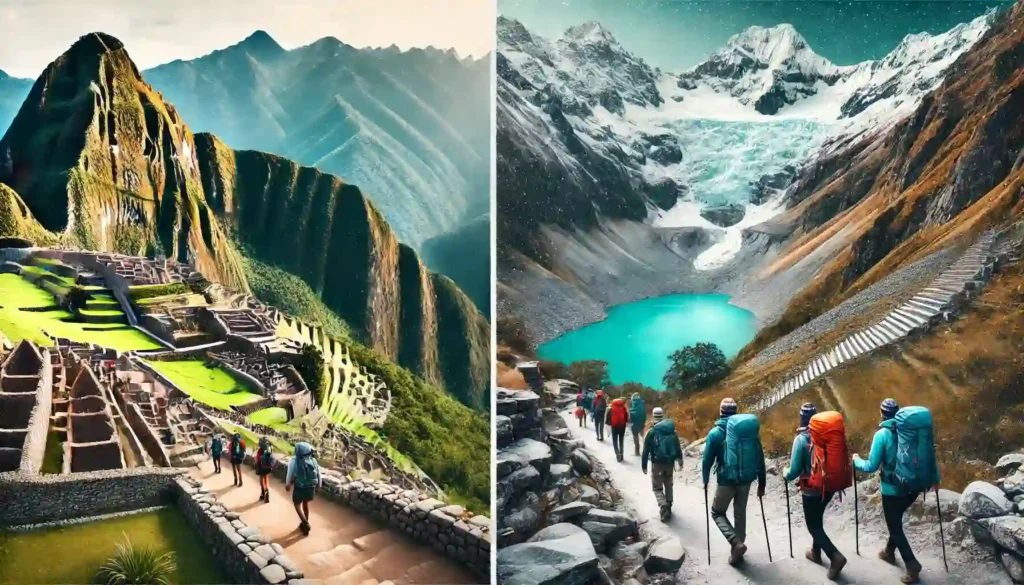
Inca Trail vs. Salkantay Trek ¡or both!
At the end of the day, whether you choose the Inca Trail or the Salkantay Trek, you’re in for an unforgettable adventure. Both routes lead you through breathtaking landscapes, challenge your limits, and reward you with the awe-inspiring sight of Machu Picchu. If you’re looking to explore even more of the region’s cultural and natural wonders, consider adding the South Valley Tour Cusco to your itinerary, where you can discover hidden gems beyond the traditional trekking routes.
If you’re someone who thrives on history, enjoys walking in the footsteps of the Incas, and dreams of arriving at Machu Picchu through the Sun Gate, then the Inca Trail is your perfect match. But if you crave solitude, love diverse natural scenery, and want the flexibility of a trek without permits, the Salkantay Trek will give you a wilder, more rugged experience.
No matter which path you take, the most important thing is to embrace the journey. The long hikes, the altitude challenges, and the moments of pure exhaustion will all be worth it when you finally stand before the Lost City of the Incas, feeling a sense of accomplishment like never before.
So, listen to your adventure spirit, choose the trek that excites you the most, and get ready for the experience of a lifetime. Machu Picchu is waiting for you!
